 Built In Oasis

AI City Expansion Engine
Functional DemoLocation intelligence that scores ZIP codes by industry-specific expansion opportunity.
Synthetic consumer simulation platform to rehearse a product launch before spending real money.
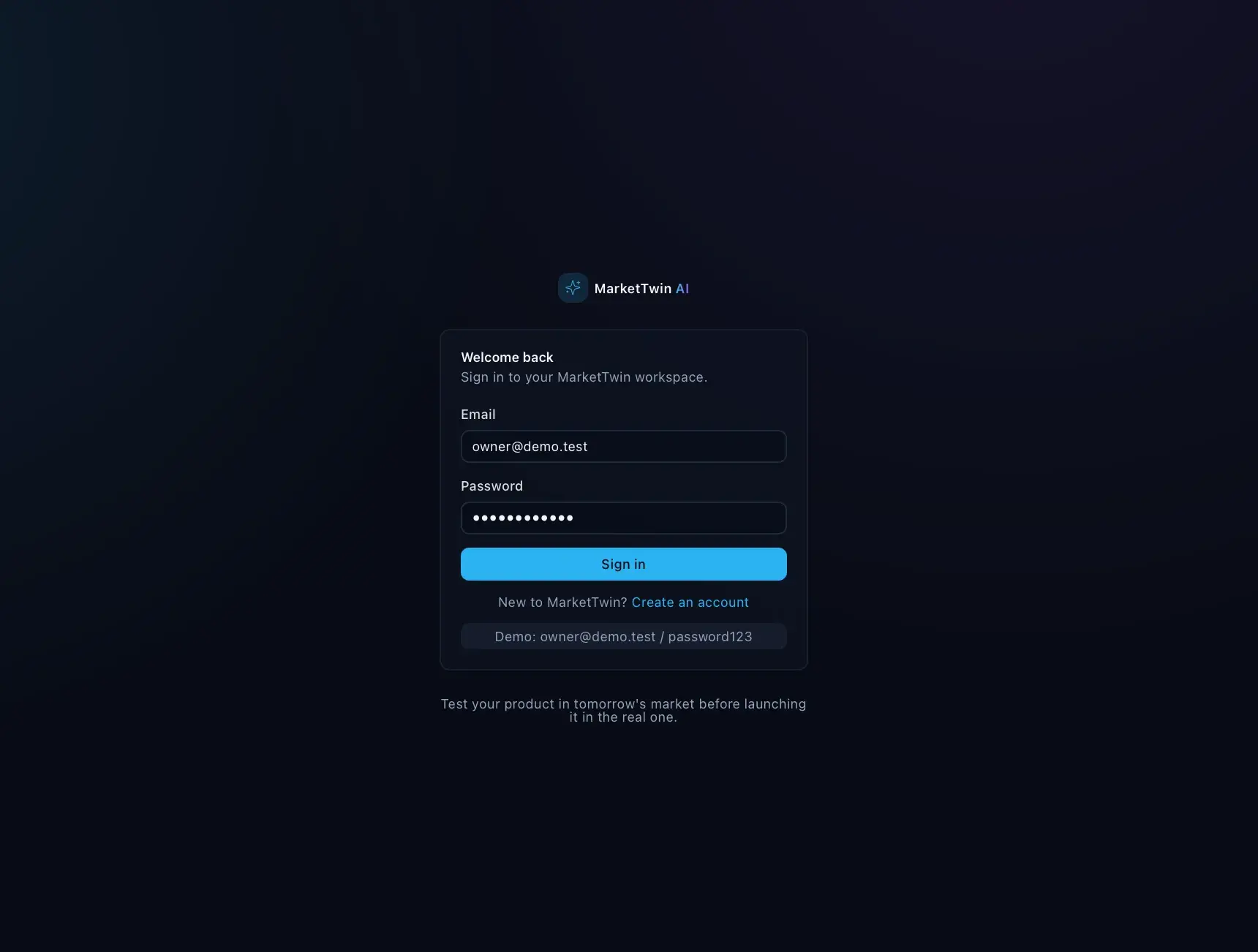
Companies spend money on product development, inventory, ads, creative, branding, and launch campaigns before they understand how the market will respond. They often don't know whether the audience understands the product, whether the price is acceptable, whether the branding builds trust, whether the market is saturated, which objections will stop buyers, or which segment is most likely to buy. The product gives them a structured way to rehearse the market before launch.
Built for Startup and SaaS founders, DTC and e-commerce brands, product managers, brand strategists, and agencies, plus enterprise innovation and research teams.
MarketTwin AI lets teams test a product idea, pricing, brand name, ad hook, landing-page copy, audience, or launch strategy inside an AI-generated market. It combines a market-intelligence layer (trend, competitor, review, and ad signals plus demographic and economic context) with audience segments and synthetic consumer personas, then runs agent-based simulations that produce purchase intent, objections, trust, price-fit, and market-readiness scores. Pricing and messaging labs, scenario comparison, confidence and assumptions tracking, and a calibration engine that compares simulations to real launch results round it out. Results feed a launch-strategy generator and exportable reports. The platform is explicit that results are directional decision support, not guaranteed predictions.
It builds a provider-based market-intelligence layer that gathers and persists clearly-labeled research artifacts, agent-based simulation over generated personas, and a confidence/assumptions engine. Background research and simulation run on Redis-backed BullMQ workers, and AI synthesis returns a configuration_required status rather than fabricating output when no key is present.
Test your product in tomorrow's market before launching it in the real one — an AI market rehearsal engine, not a prediction toy.
Product Test Builder
Guided intake that collects product, audience, price, and competitor context.
Market Intelligence Engine
Central data layer collecting and normalizing market signals across sources.
Trend Intelligence Engine
Determines whether a category is emerging, accelerating, mainstream, saturated, or declining.
Competitive Intelligence Engine
Identifies competitors, pricing, positioning, threats, and market gaps.
Review Intelligence Engine
Mines reviews into a category-expectation profile of what customers expect, love, and hate.
Ad Intelligence Engine
Classifies hooks, CTAs, trust signals, and saturation risk from advertising.
Demographic and Economic Signal Engine
Pulls demographic and economic context into the market model.
Audience Segment Builder
Create, weight, and compare audience segments with behavior assumptions.
Synthetic Consumer Engine
Generates personas with demographic, psychographic, and behavioral variables.
Agent-Based Simulation Engine
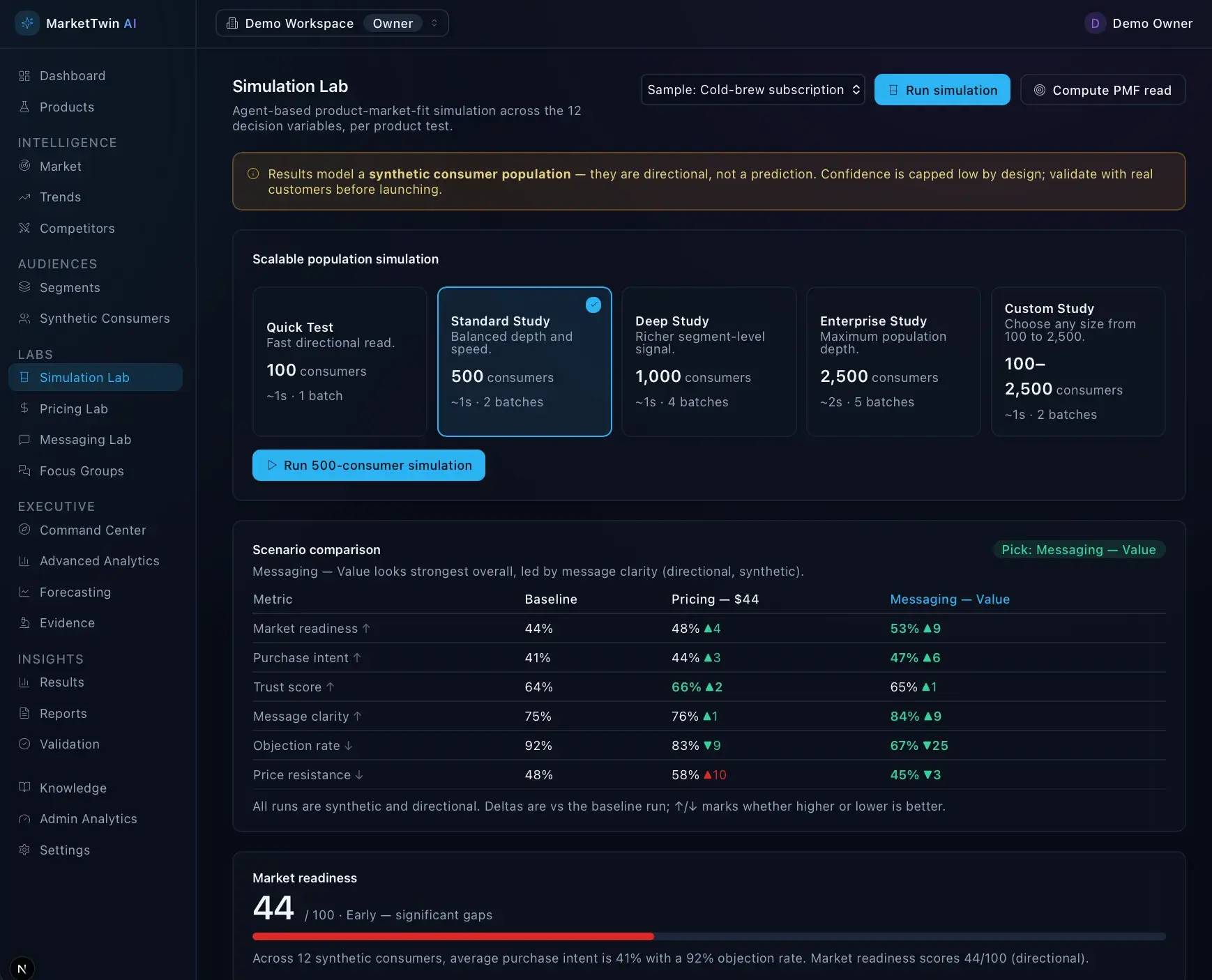
Synthetic consumers evaluate scenarios across 14 decision variables and produce structured reactions.
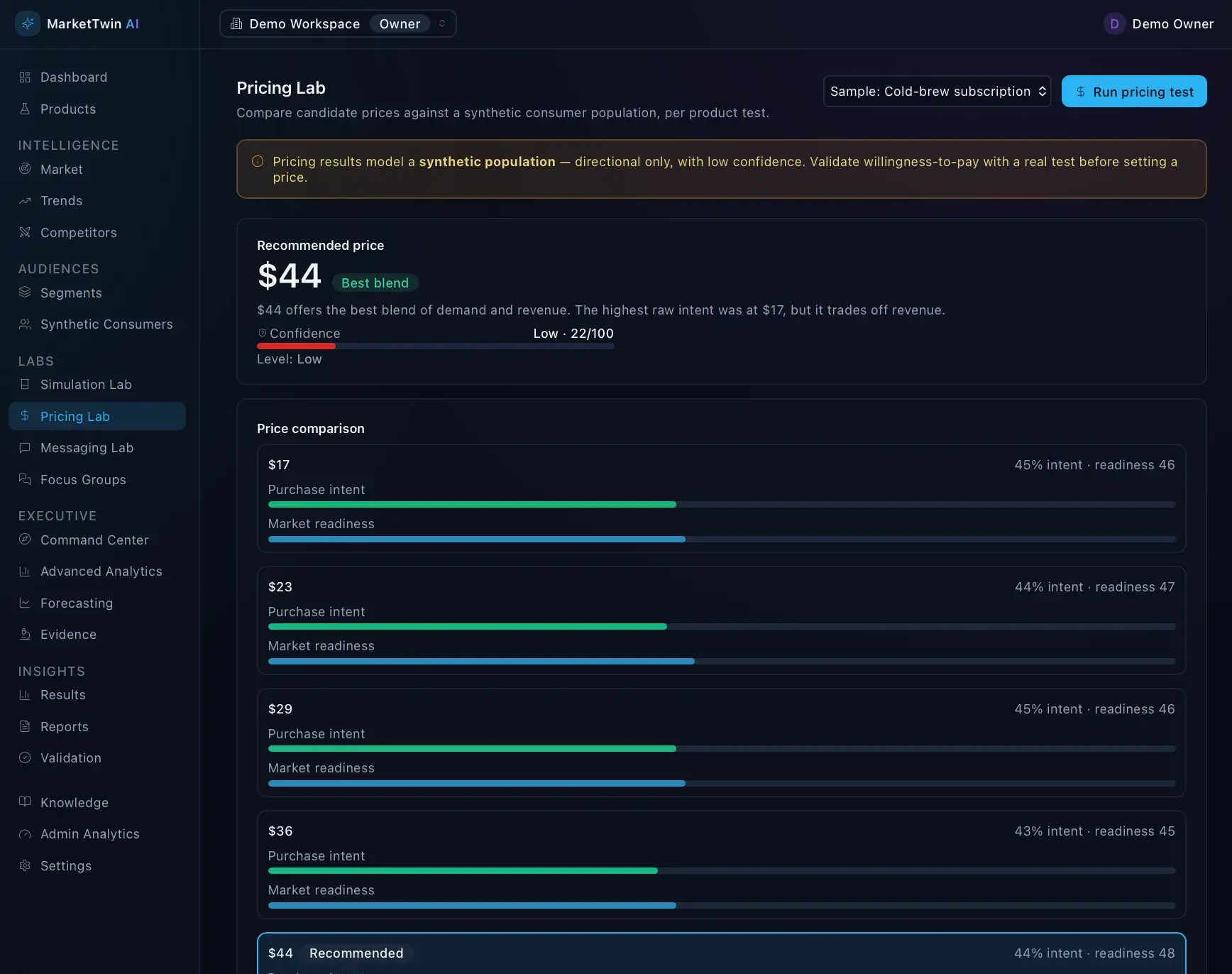
Pricing Lab
Tests price points and packaging models for revenue and objection rate.
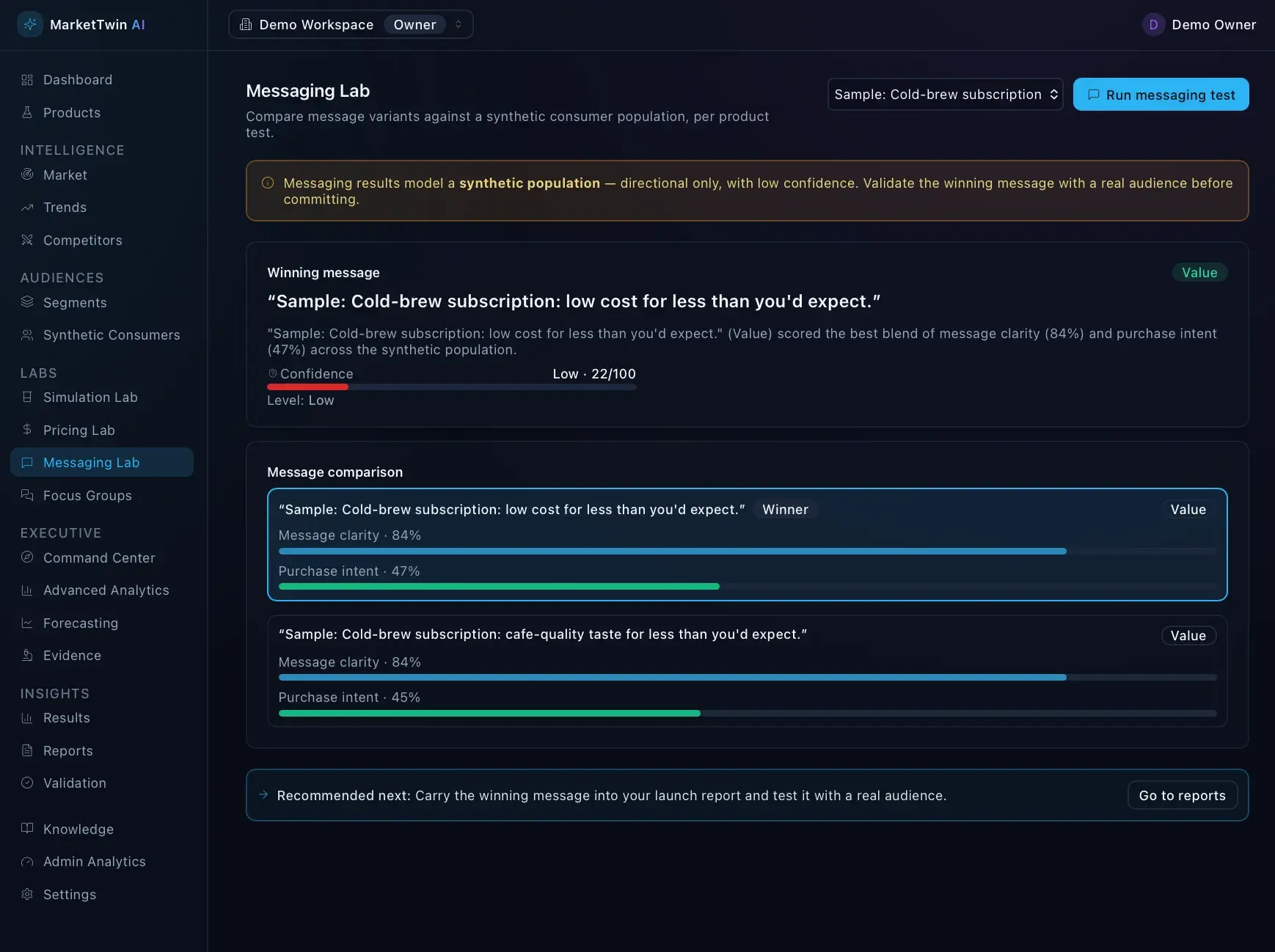
Messaging Lab
Tests names, taglines, hooks, and value props for clarity and resonance.
Product-Market Fit Lab
Scores the product against the selected market across ten dimensions.
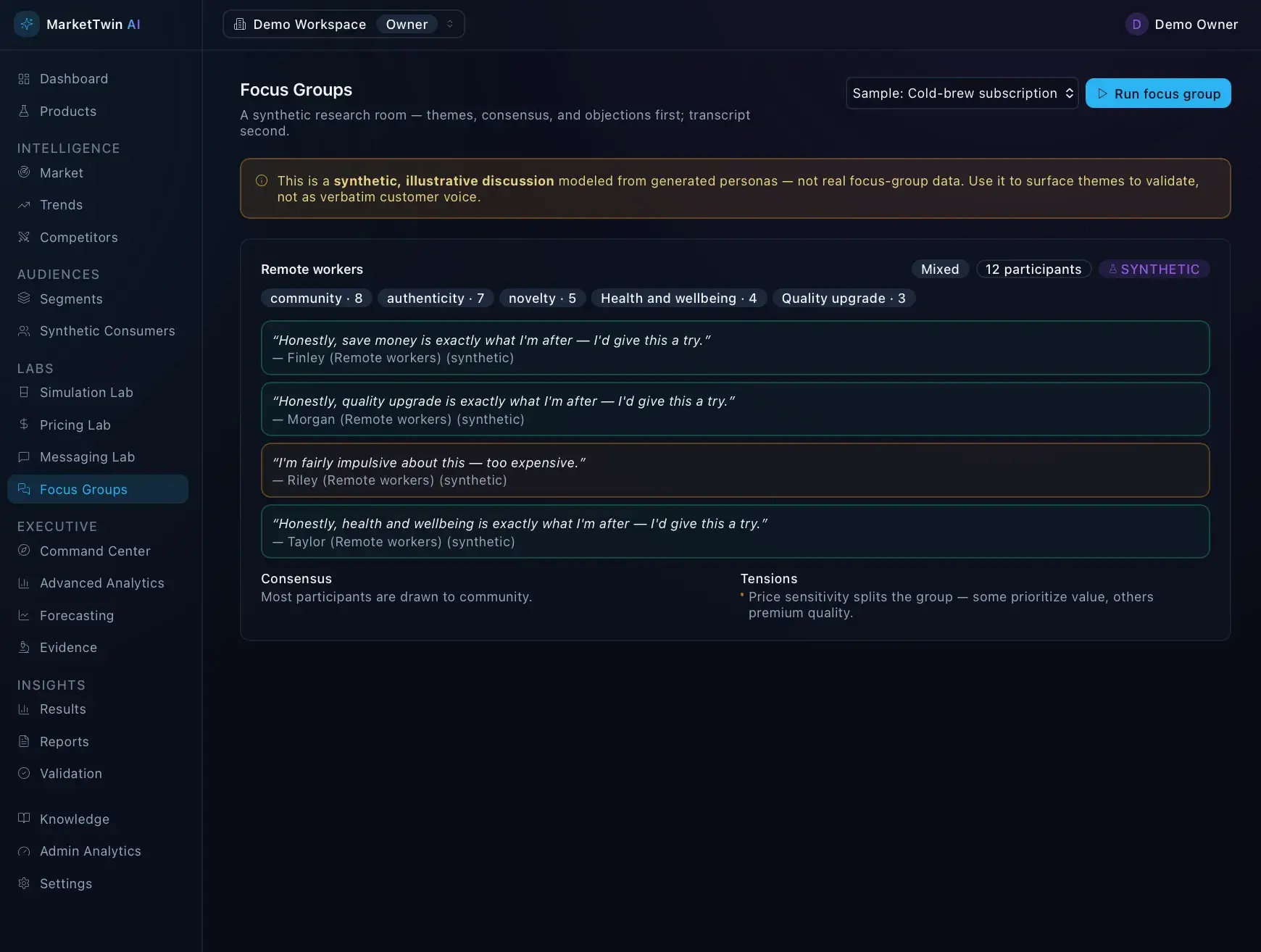
Synthetic Focus Groups
Runs simulated focus groups that surface objections, triggers, and consensus.
Scenario Comparison
Compares product, price, message, or audience scenarios side by side.
Confidence and Assumptions Engine
Attaches confidence, supporting data, assumptions, and limitations to every result.
Calibration and Validation Engine
Compares simulations against real launch results to improve accuracy.
Launch Strategy Generator
Turns findings into a segment, price, message, channel, and 30-day plan.
Market Readiness Report
Clean results view executives can read in under 30 seconds.
PDF Export
Professional multi-section report with disclaimer.
Market Readiness Score
How clearly the audience understands the product.
How well the product matches the target segment.
How acceptable the price feels to the market.
How much trust the offer generates.
How well timing aligns with category momentum.
Strength of differentiation against competitors.
How likely objections are to block conversion.
Overall confidence in a launch decision.
How urgently real-world validation is needed.
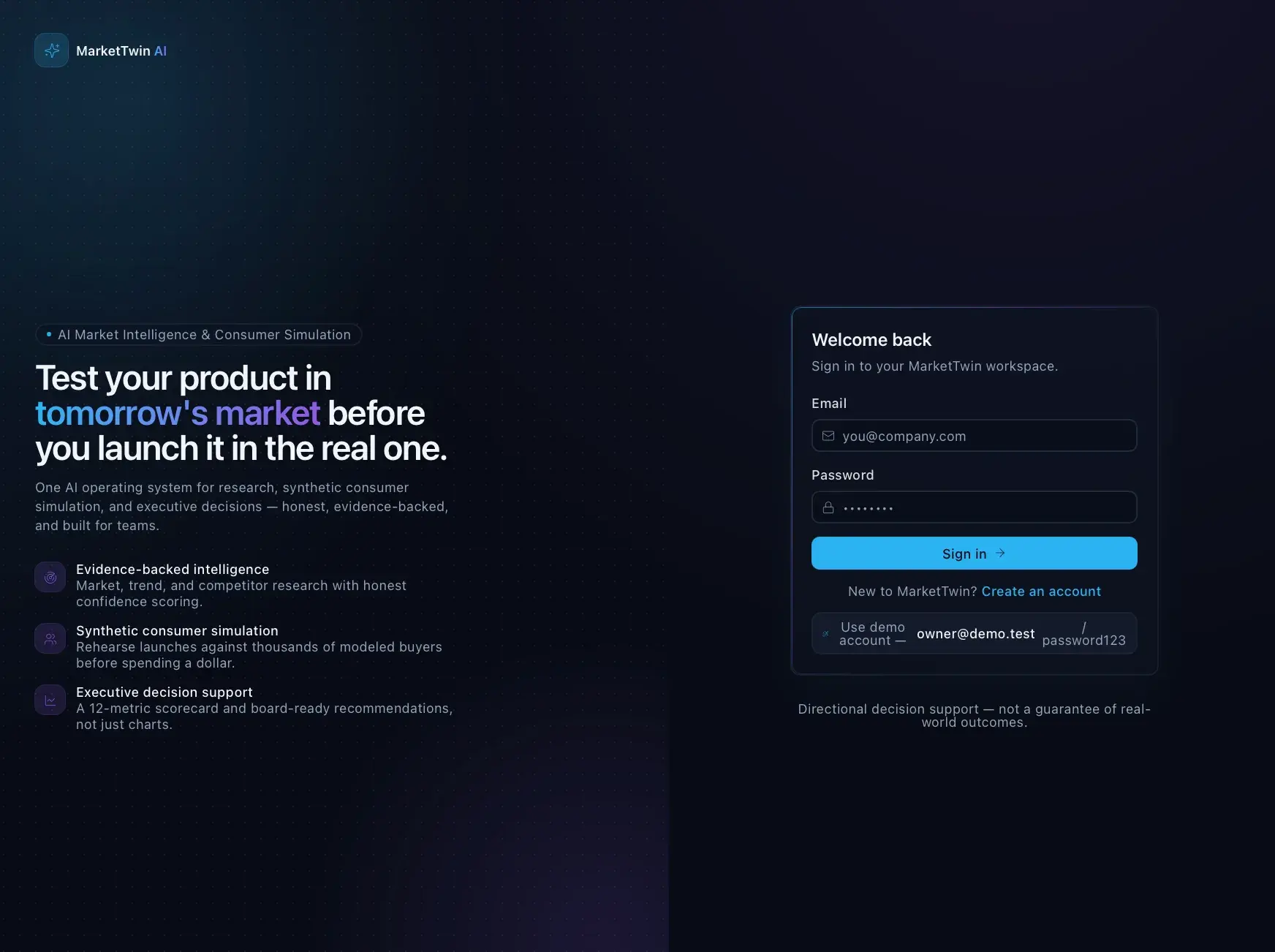
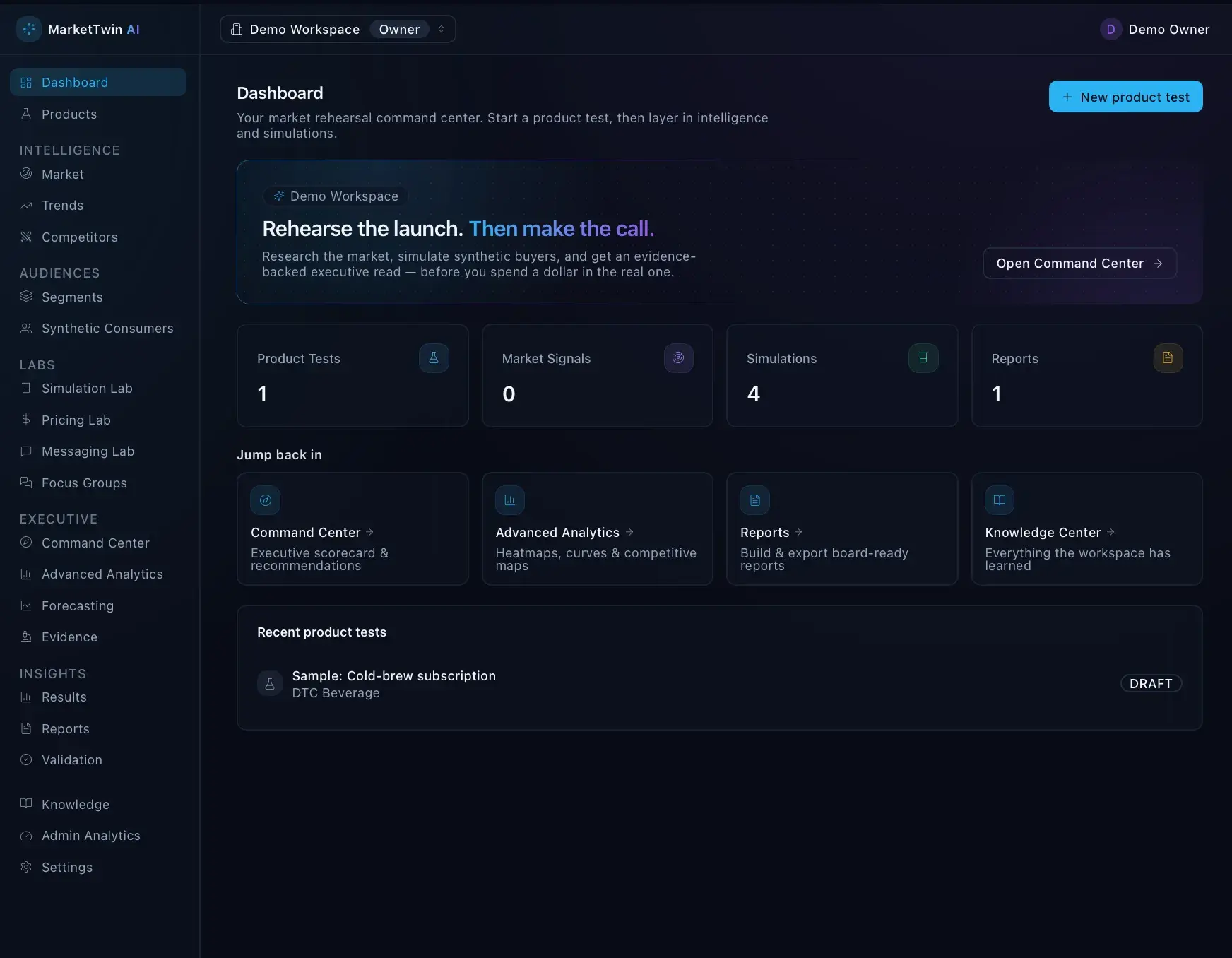
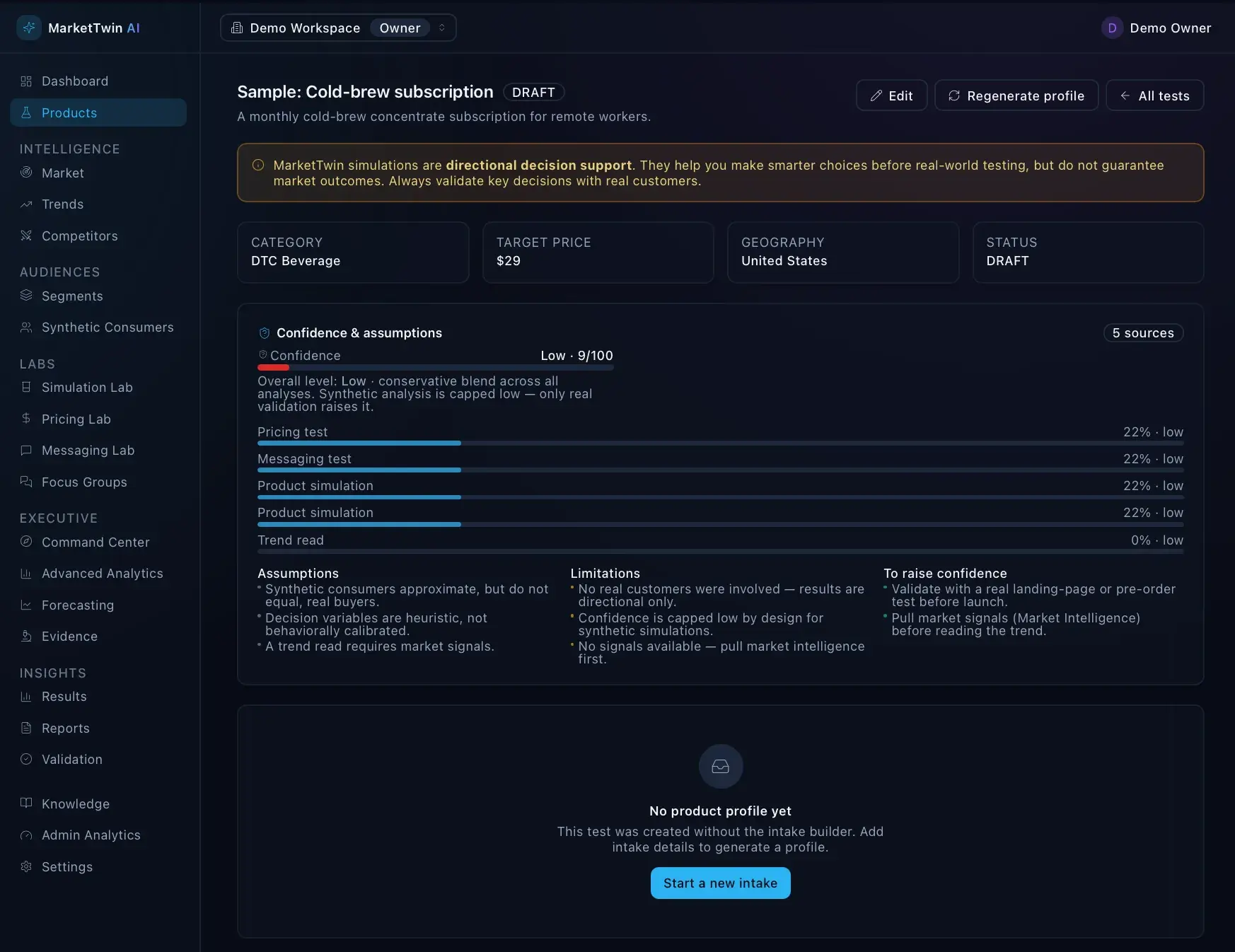
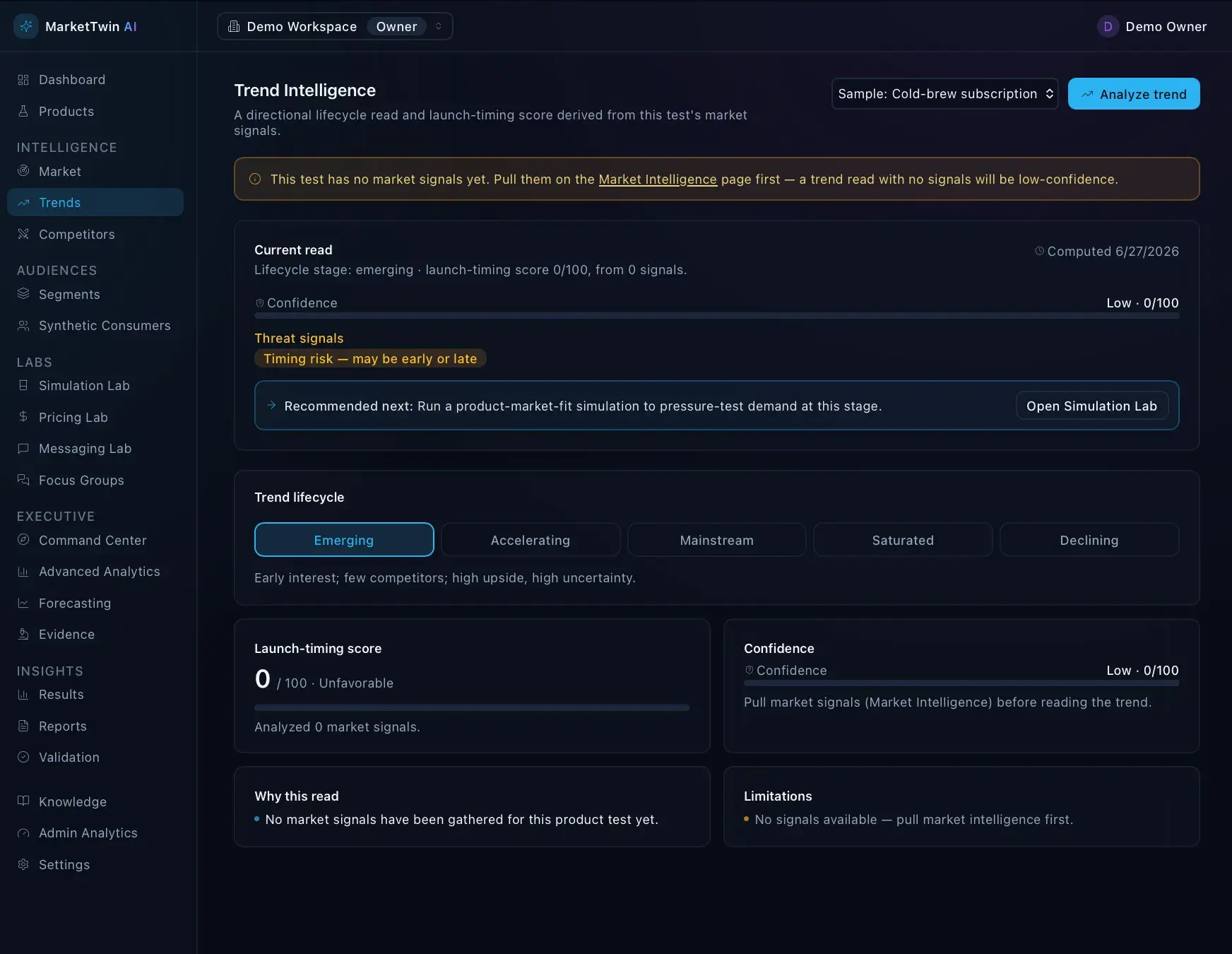
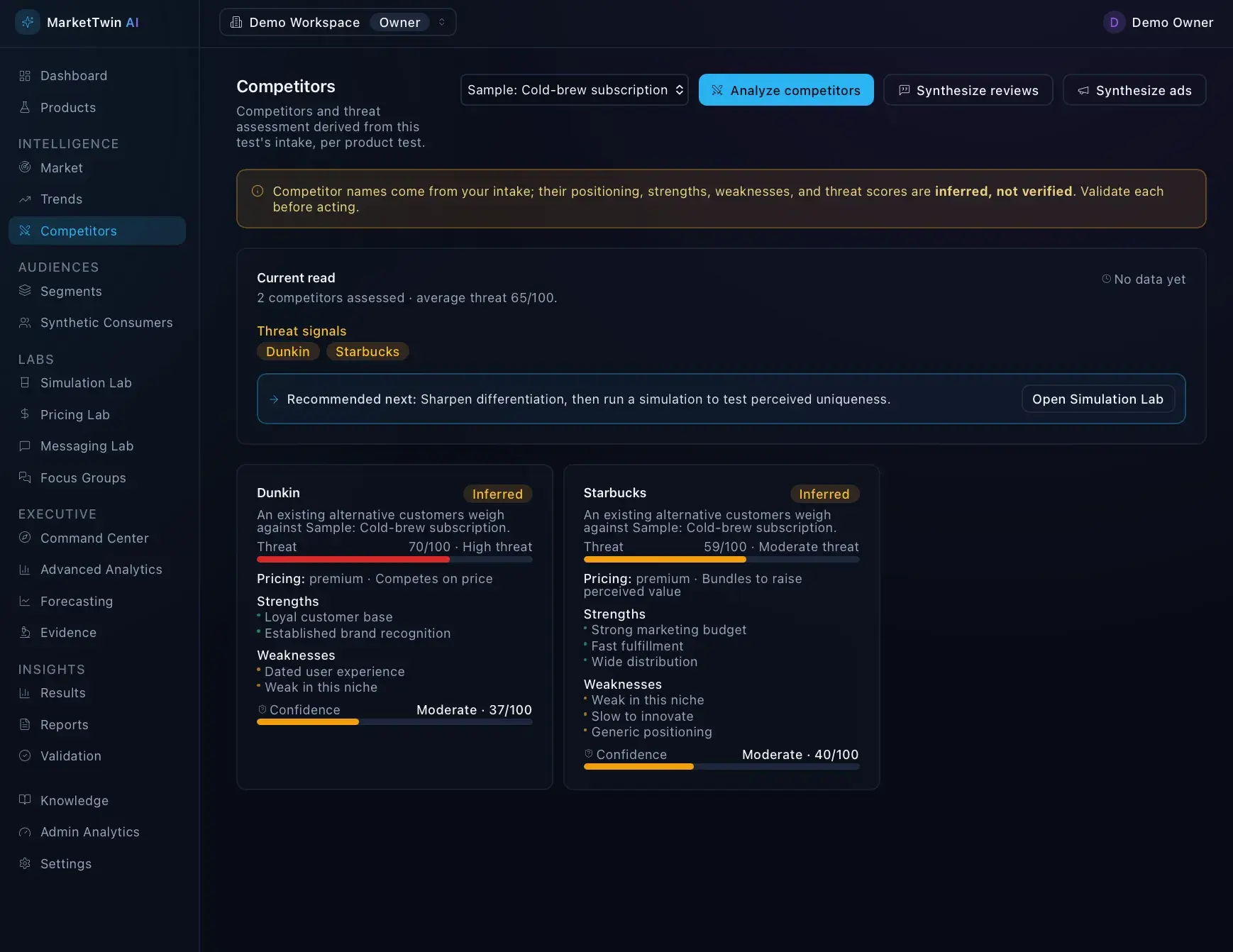
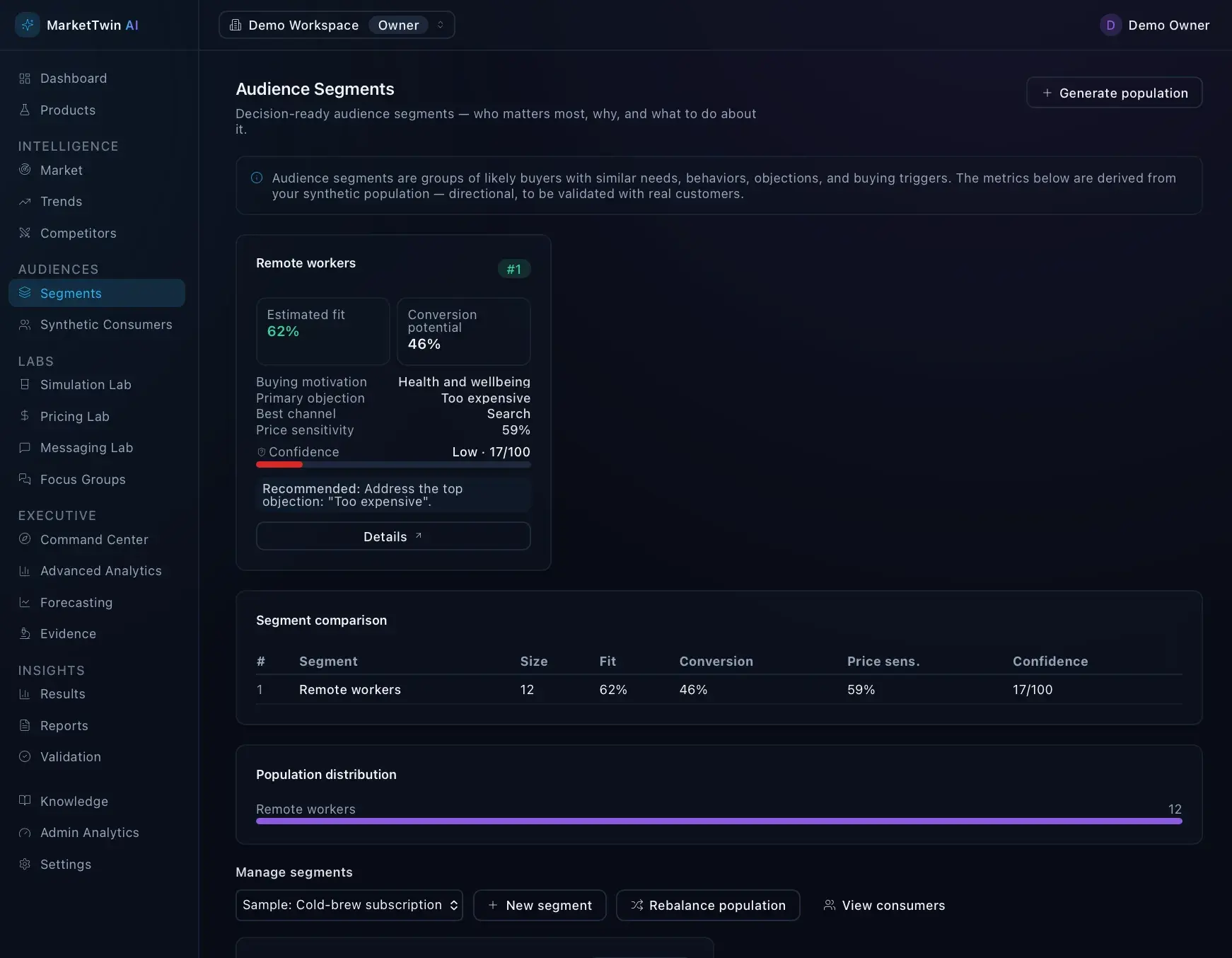
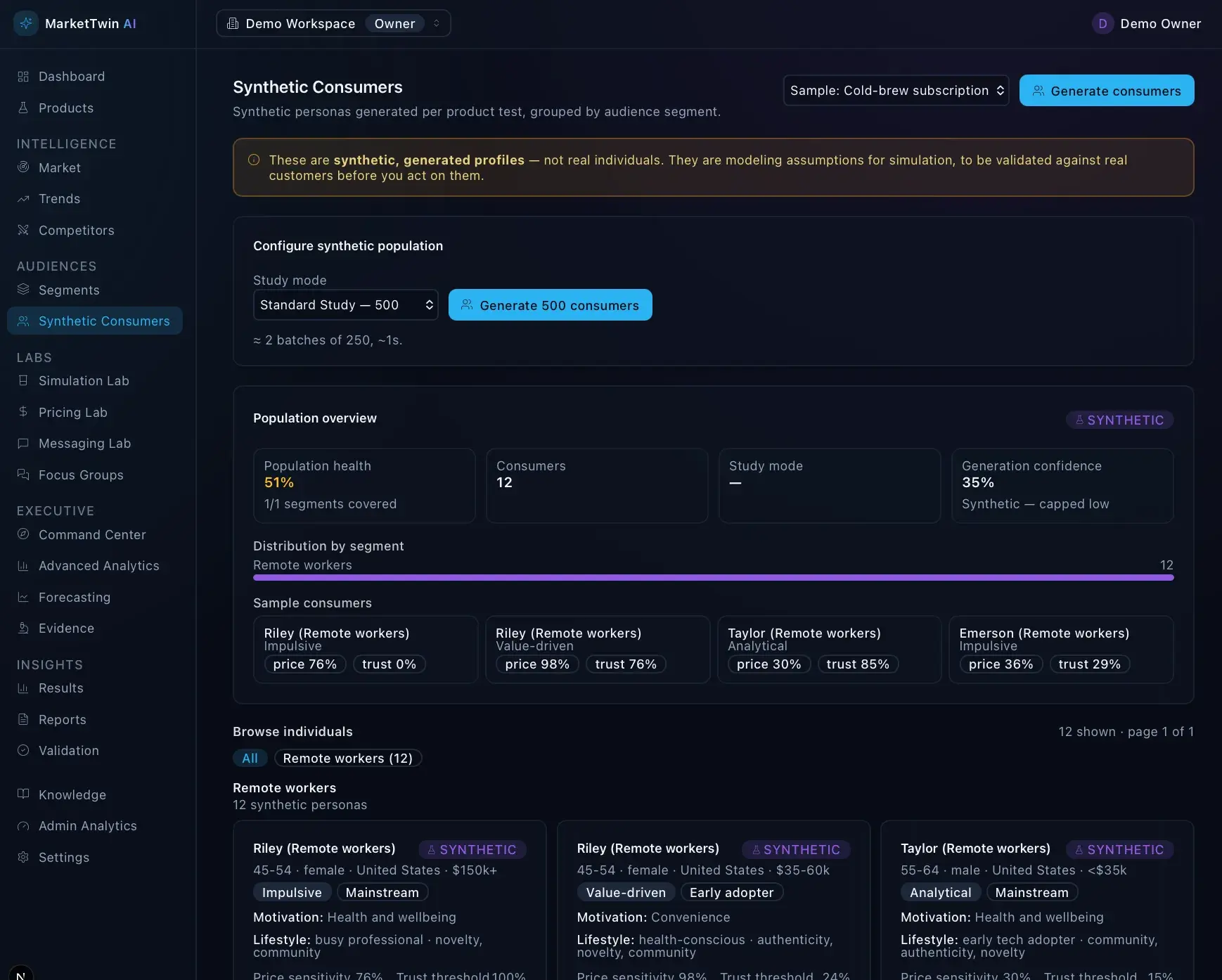
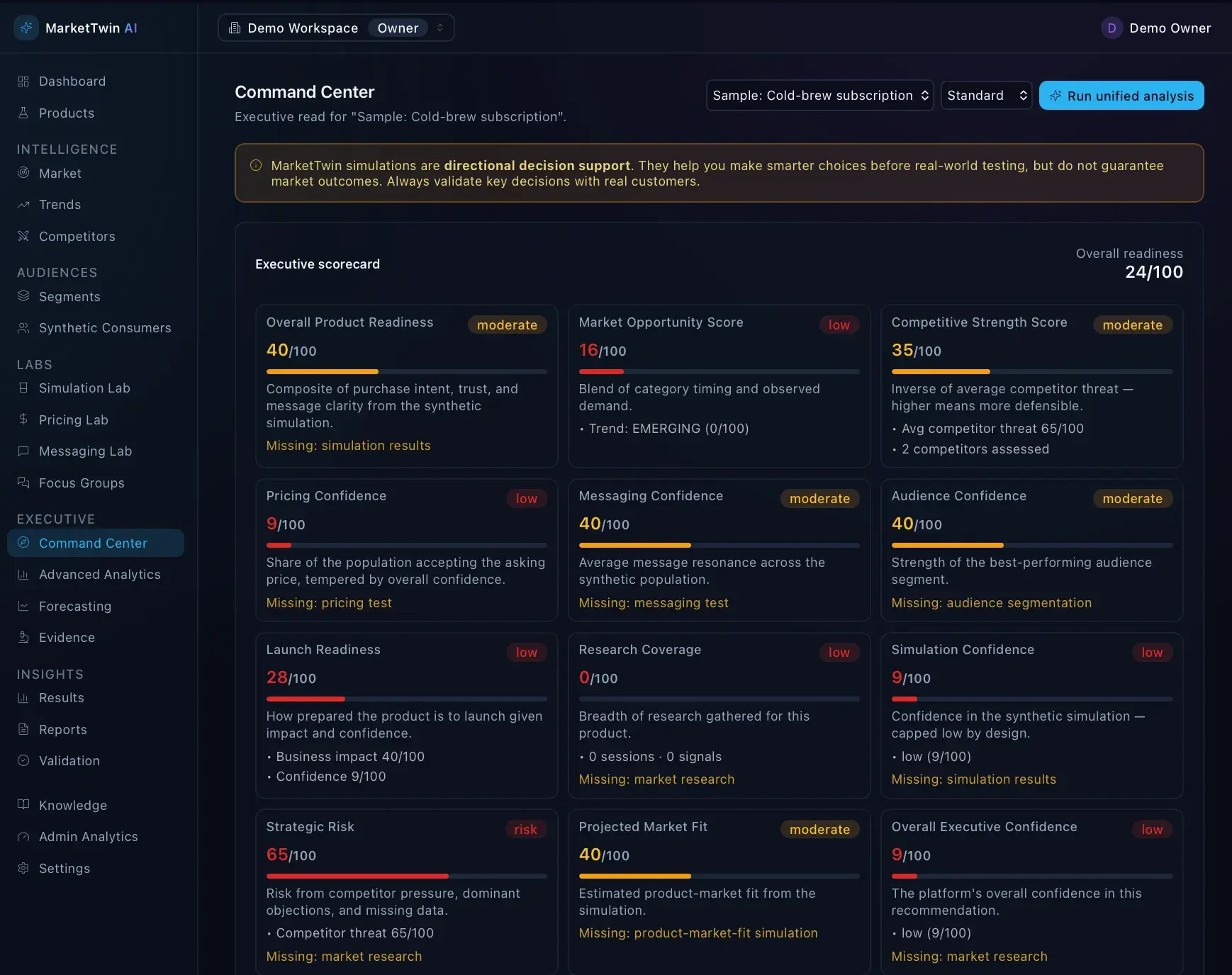
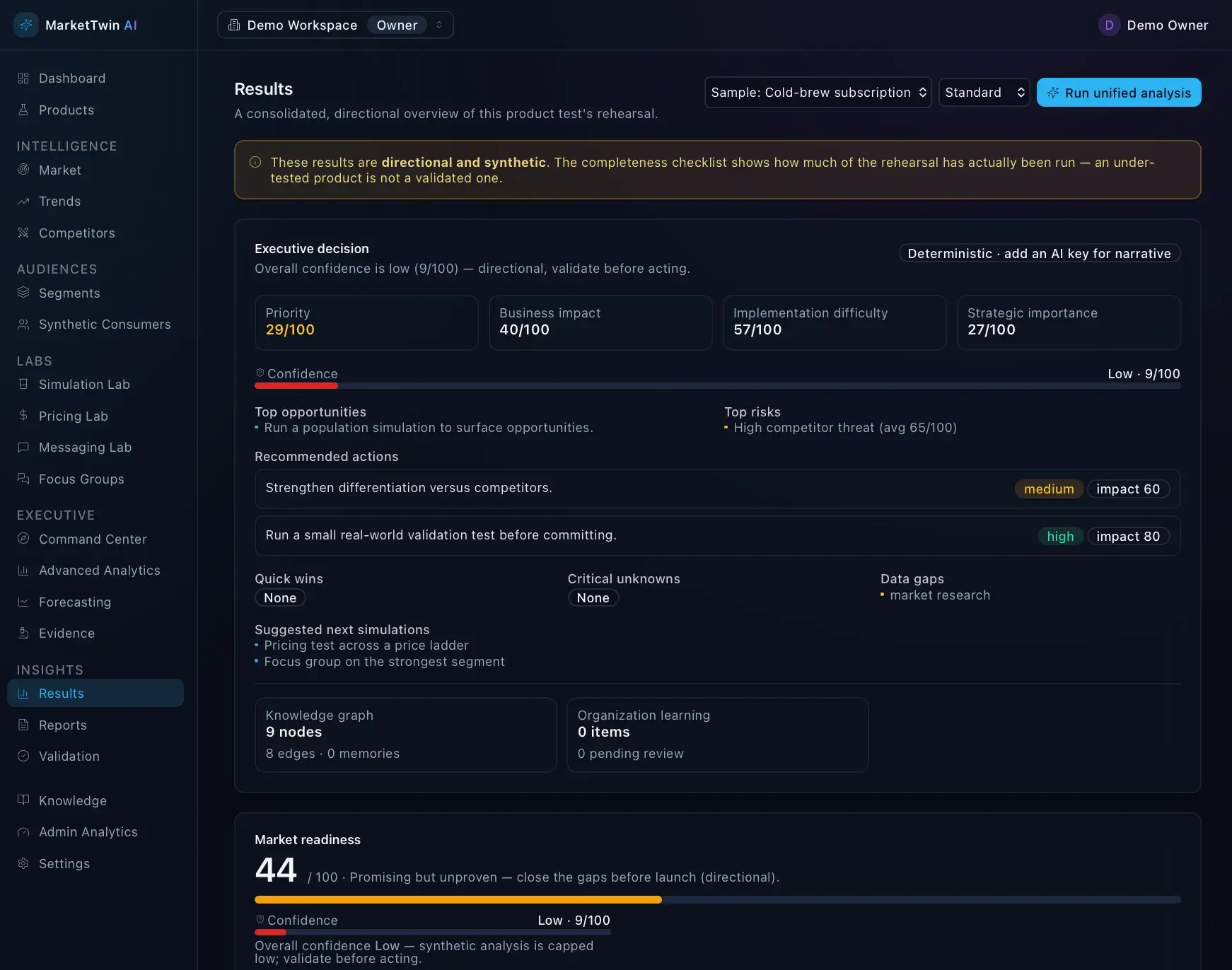
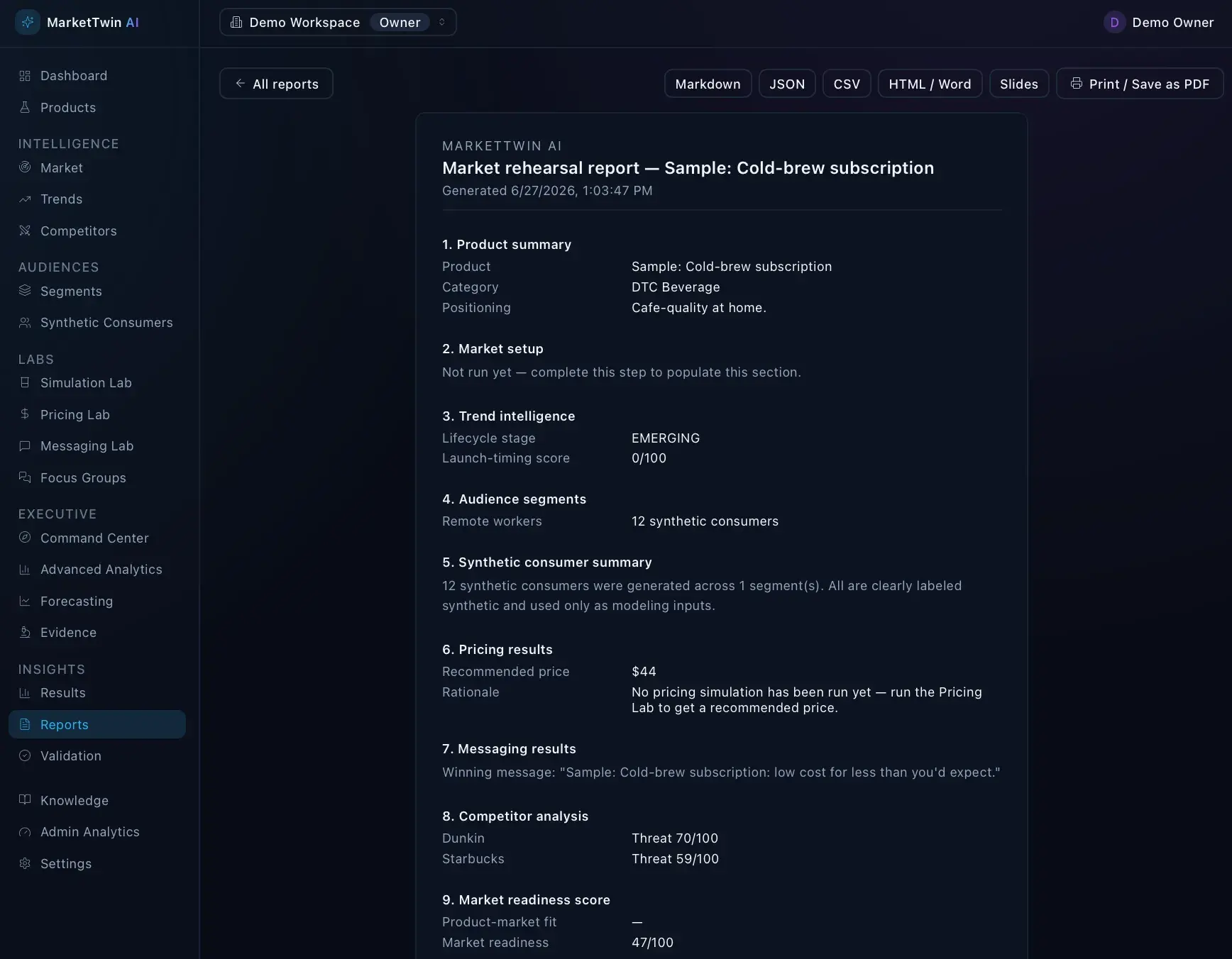
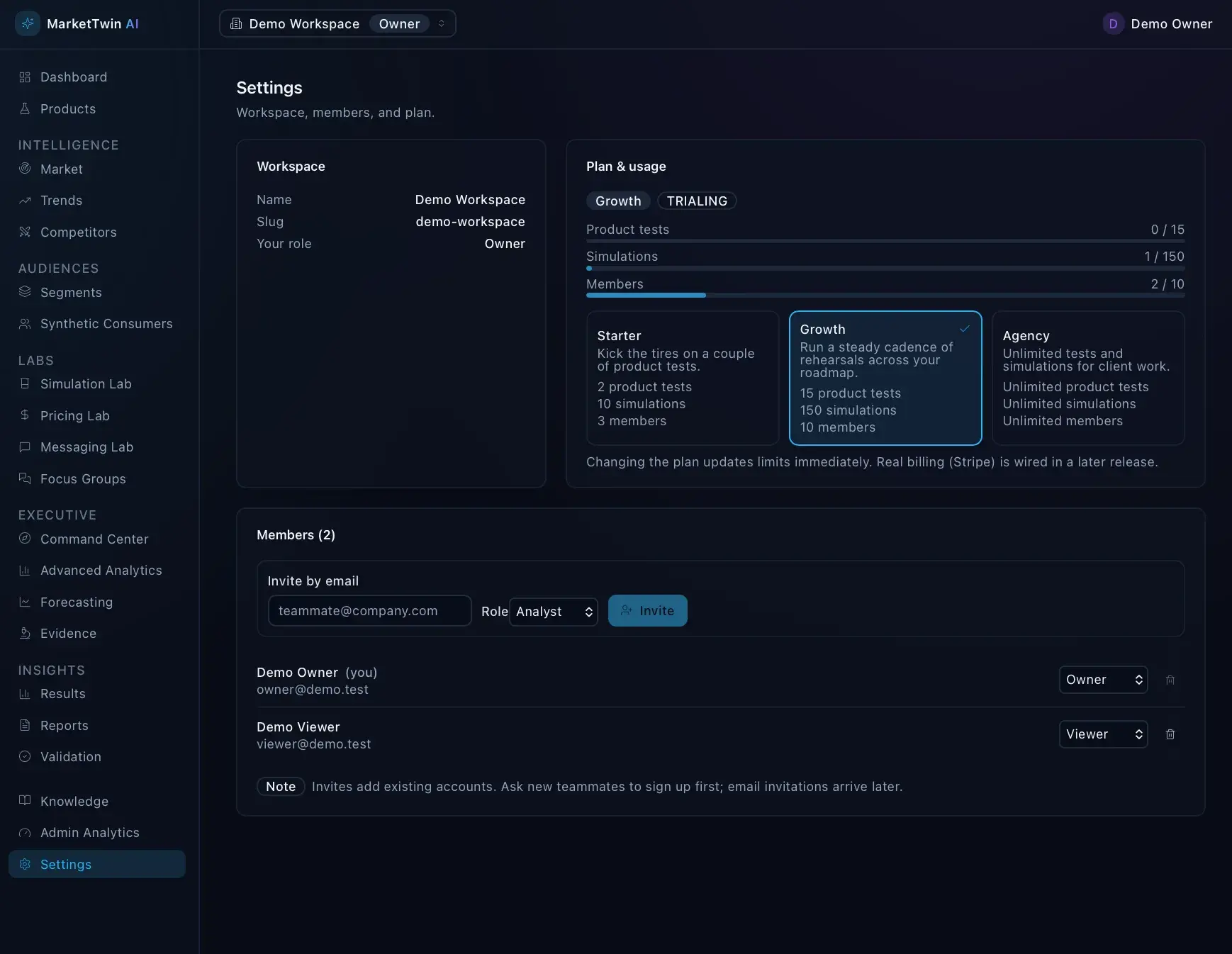
A Next.js app with Prisma over PostgreSQL, Redis-backed BullMQ workers for research and simulation jobs, and Auth.js authentication with workspace-scoped isolation. Anthropic Claude is the working synthesis provider, with other providers registered but inert until keys are added.
Location intelligence that scores ZIP codes by industry-specific expansion opportunity.
An AI acquisition-intelligence platform that surfaces and scores off-market acquisition targets from public business signals.
Material price-shock monitoring that ties supplier price movement to margin exposure and pricing recommendations.
Start a project and reference this one — the conversation begins with what you have already seen.
Start a project