 Built In Oasis


Neighborhood Future Value Predictor
Functional DemoMap-first real estate growth intelligence for builders, developers, and land acquisition teams.
Multi-layer AI system that detects mispriced real estate assets before market correction.
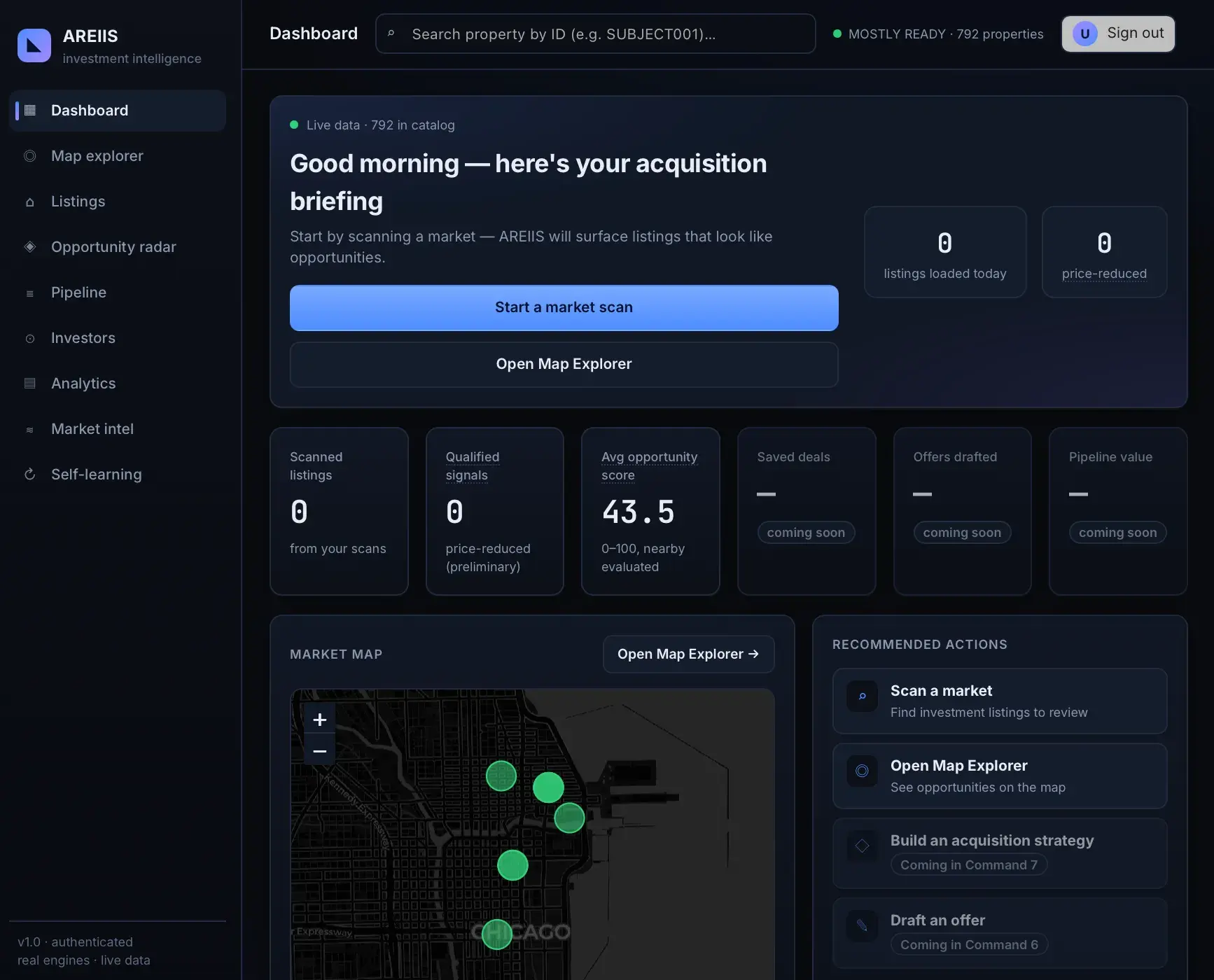
Real estate valuation tools output single-point estimates that ignore property condition, market behavior, and uncertainty. Investors cannot see where an asset is mispriced relative to its true condition and market context, and existing tools do not learn from real outcomes. Opportunities are found too late, after the market has already corrected.
Built for Real estate investors and institutional buyers seeking mispriced assets and renovation opportunities.
AREIIS ingests nationwide property and transaction data, normalizes it, and builds probabilistic valuation distributions rather than single values. It analyzes property condition from images with computer vision, models market and behavioral signals, and scores pricing inefficiencies to classify opportunities from strong buy to high risk. A renovation delta engine simulates ARV and ROI, a smart-money engine tracks institutional capital flow, and a geo-spatial engine renders opportunity heatmaps. Multiple AI agents collaborate under an orchestration layer that reconciles conflicting model outputs, and a feedback loop recalibrates the models from actual sale outcomes.
Implements a layered, multi-agent intelligence pipeline where no single model has final authority: probabilistic valuation with explicit confidence scoring, a vision-derived condition vector that feeds valuation, a multi-factor inefficiency scoring engine, and an orchestration layer that resolves model contradictions by weighted consensus. Built as per-engine services with queue-based, event-driven processing and an outcome-driven self-learning loop.
AREIIS is not a valuation tool. It is a market-inefficiency detection system that finds mispriced real estate assets before the market corrects.
Data ingestion layer
Pulls property, transaction, tax, image, and geo data from multiple tiers.
Property normalization layer
Structures heterogeneous datasets into one property schema.
Market intelligence engine
Models market cycles, volatility, and demand.
Computer vision condition engine
Turns images into a per-attribute condition vector and score.
Comparable sales engine
Similarity scoring across geography, structure, time, and condition.
Valuation distribution engine
Outputs low, median, high, and peak-probability values with confidence.
Opportunity inefficiency engine
Multi-factor scoring that classifies mispriced assets.
Renovation delta engine
Estimates ARV, renovation cost, ROI, and flip viability.
Smart money flow engine
Tracks institutional purchases and capital-flow direction.
Geo-spatial market engine
Inefficiency, appreciation, and distress-cluster heatmaps.
AI orchestration layer
Reconciles model conflicts by weighted consensus.
Self-learning feedback loop
Recalibrates comps, condition, and regional factors from outcomes.
Multi-agent system
Specialized agents coordinated by a final-authority orchestrator.
Opportunity Inefficiency Score
Gap between median fair value and the asking price.
Vision-derived condition applied to value.
Direction and strength of the local market.
Seller distress, anchoring, and demand-timing signals.
Institutional entry and capital clustering.
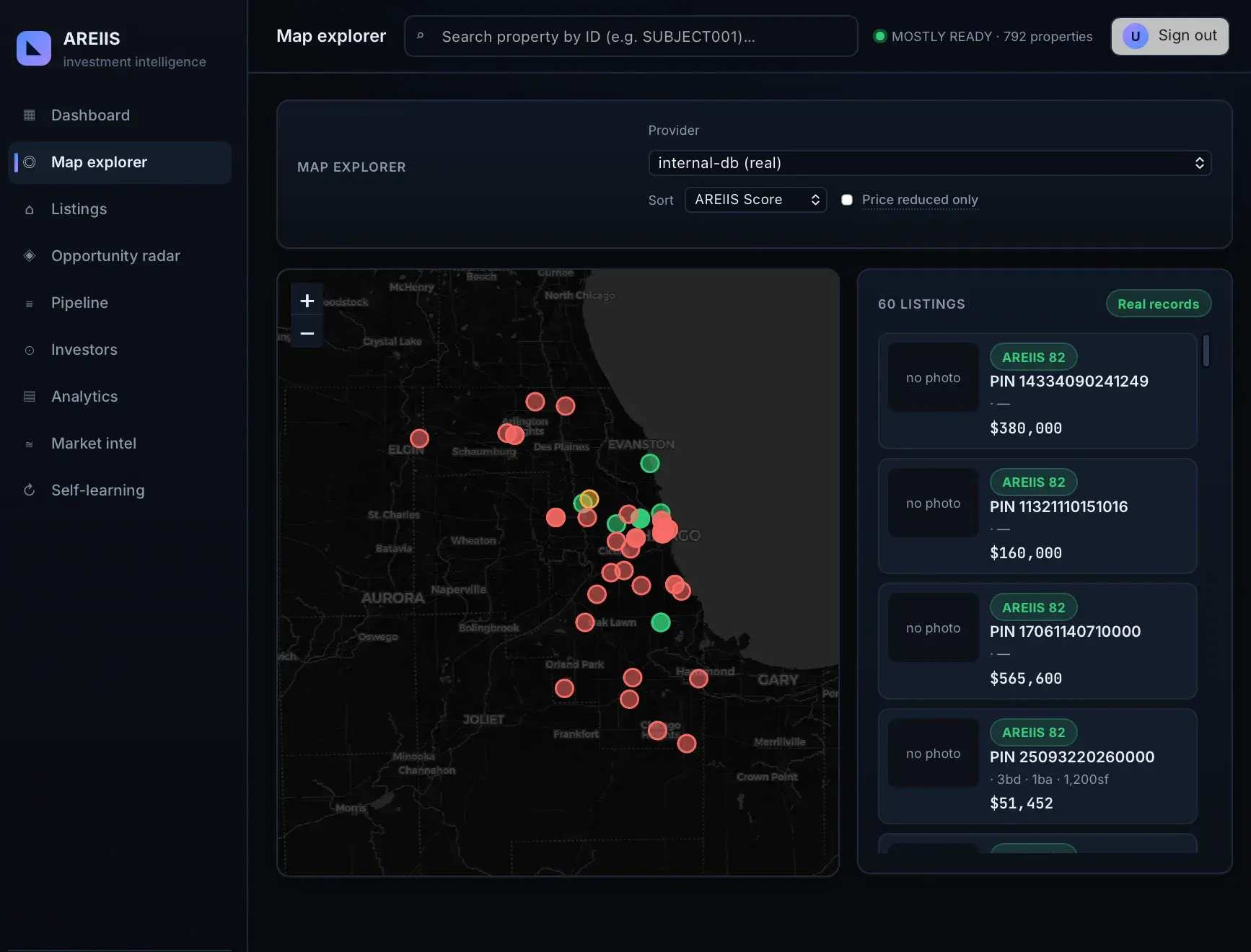
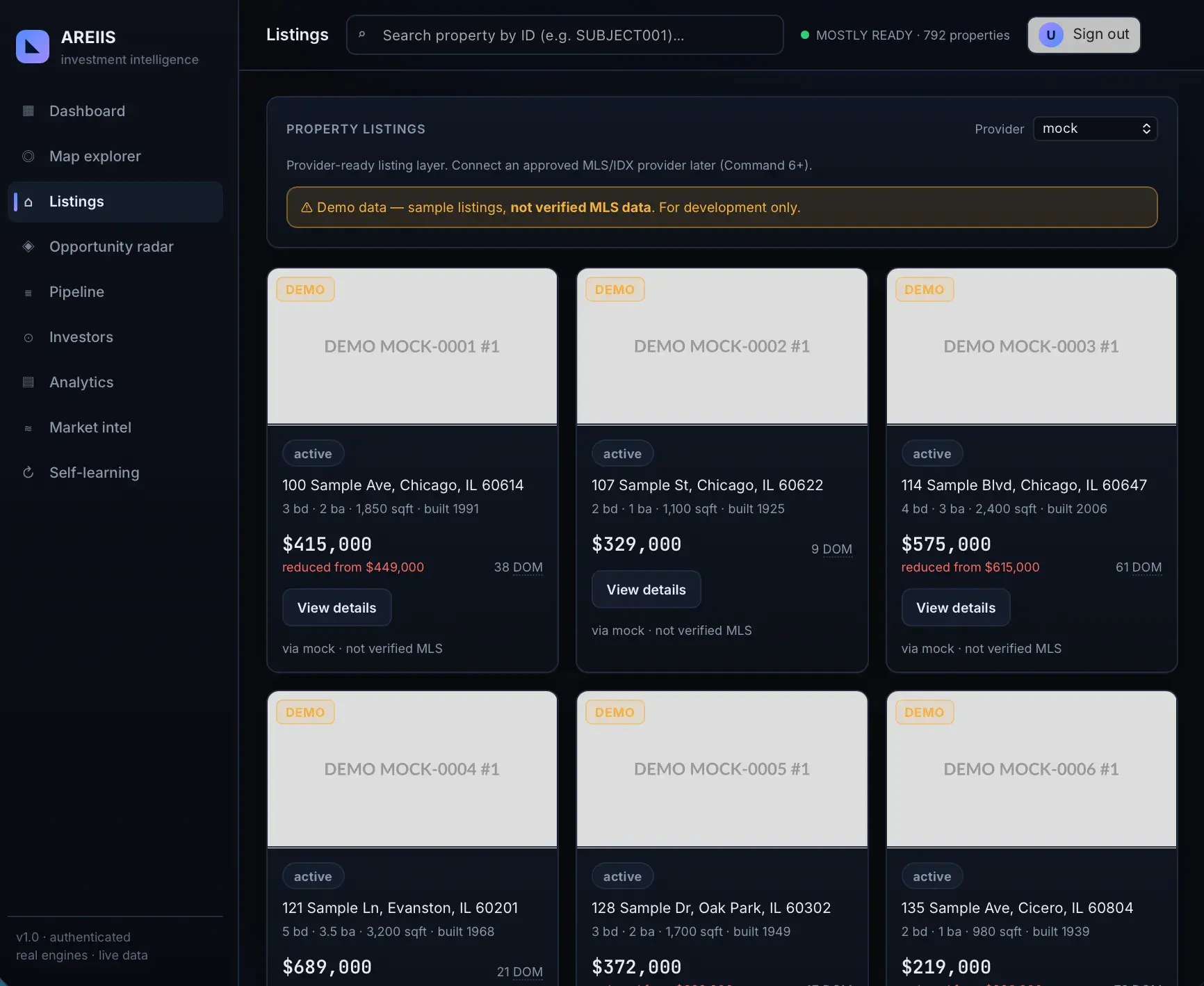
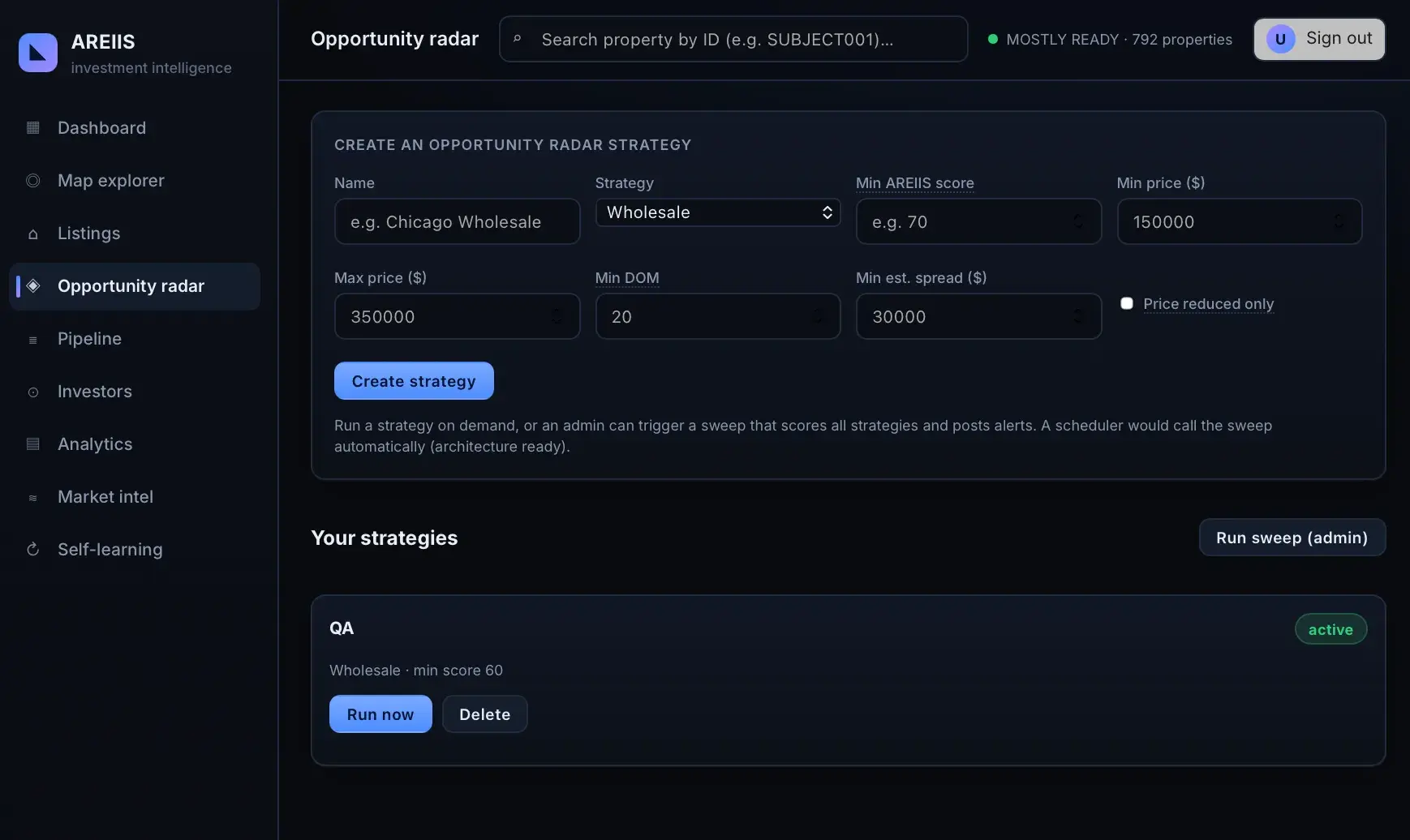
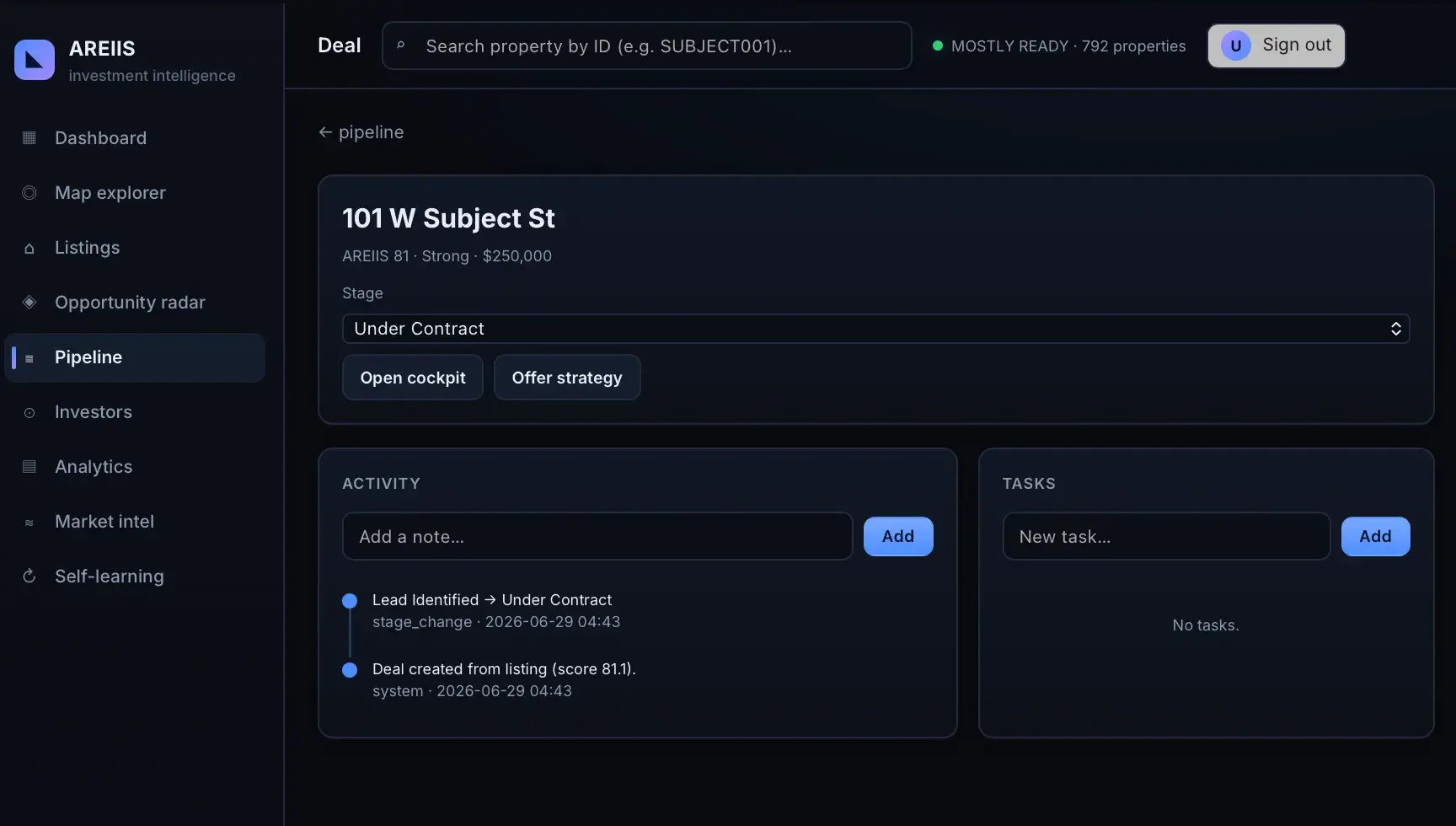
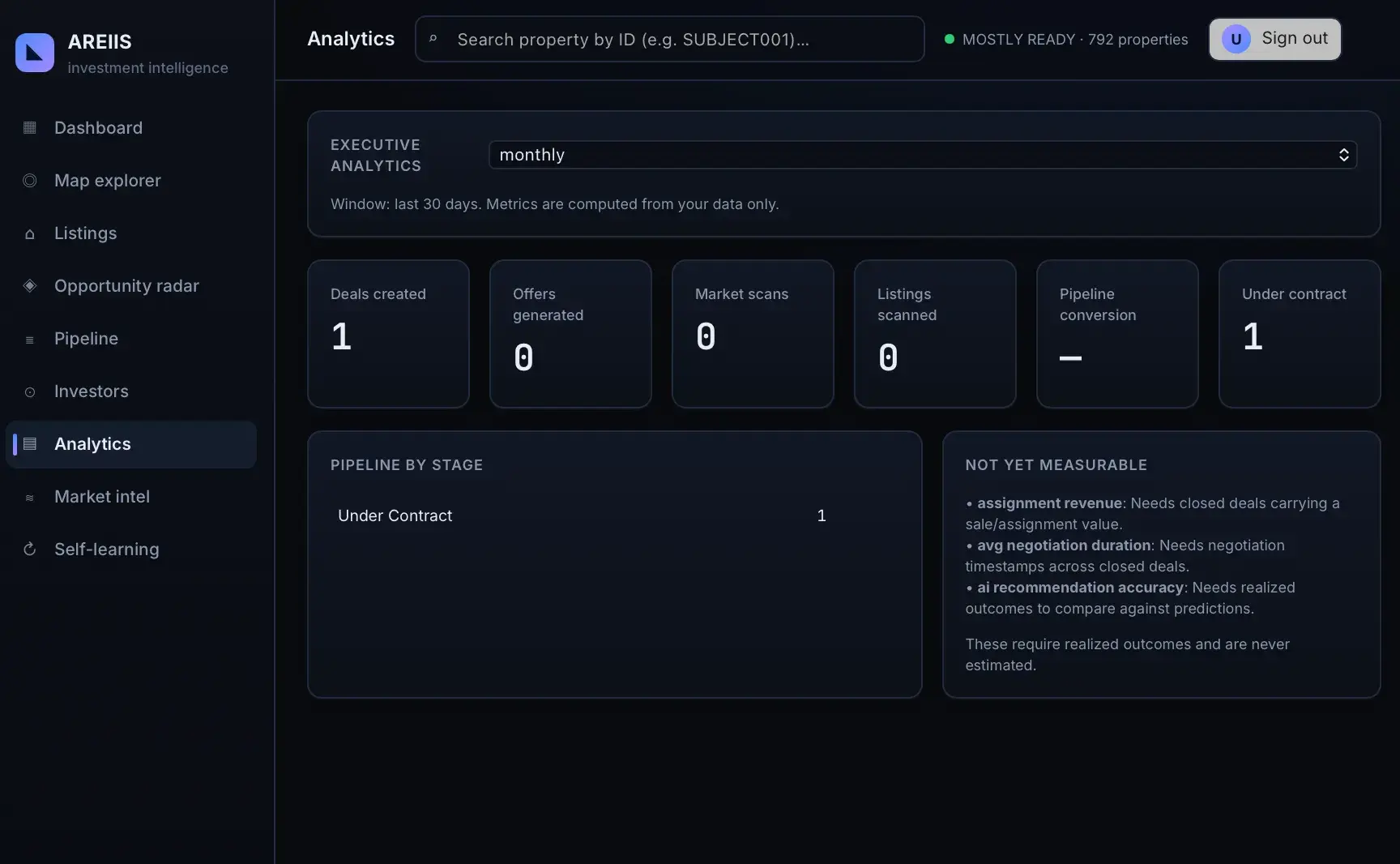
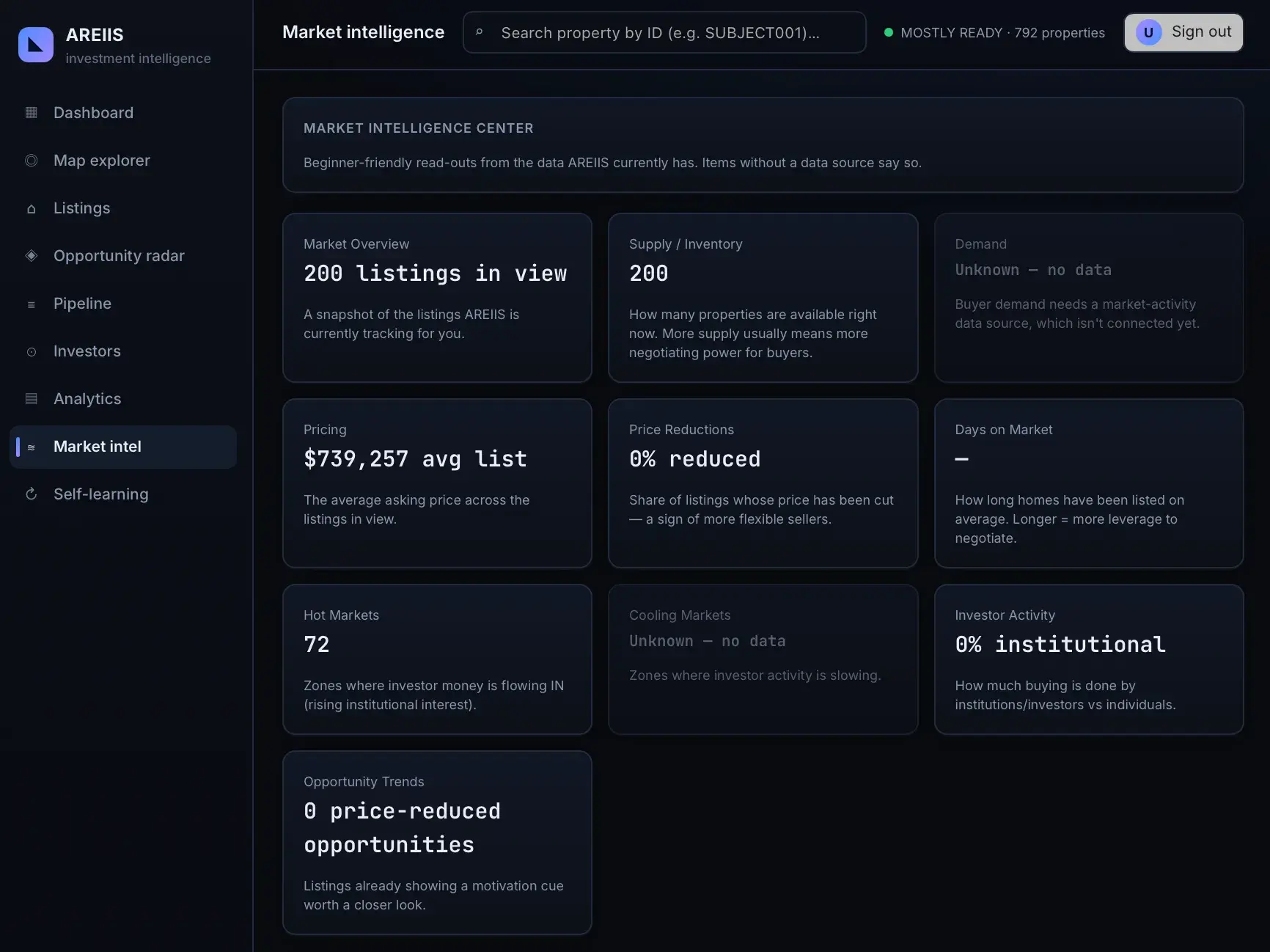
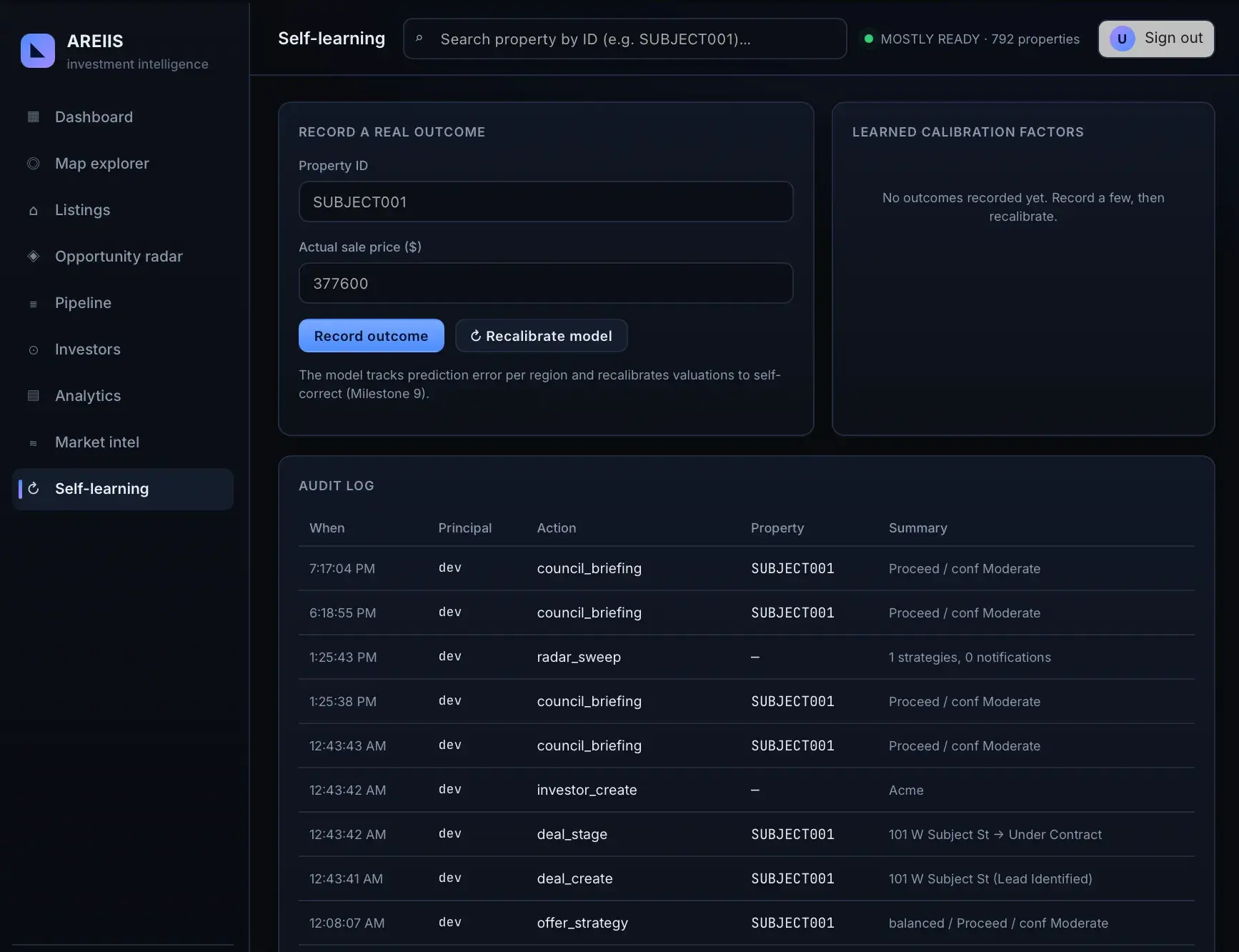
A Python FastAPI backend using SQLAlchemy over PostgreSQL (SQLite for local runs), organized as separate per-engine services with event-driven, queue-based processing and optional Redis caching. Claude powers the vision condition engine, and third-party property data is ingested from ATTOM, Estated, and Socrata sources.
Map-first real estate growth intelligence for builders, developers, and land acquisition teams.
Computer vision on aerial and street-view imagery that turns roofs into storm-scored contractor leads.
Location intelligence that scores ZIP codes by industry-specific expansion opportunity.
Start a project and reference this one — the conversation begins with what you have already seen.
Start a project